
What Is an Unsafe Discharge From Hospital Care?
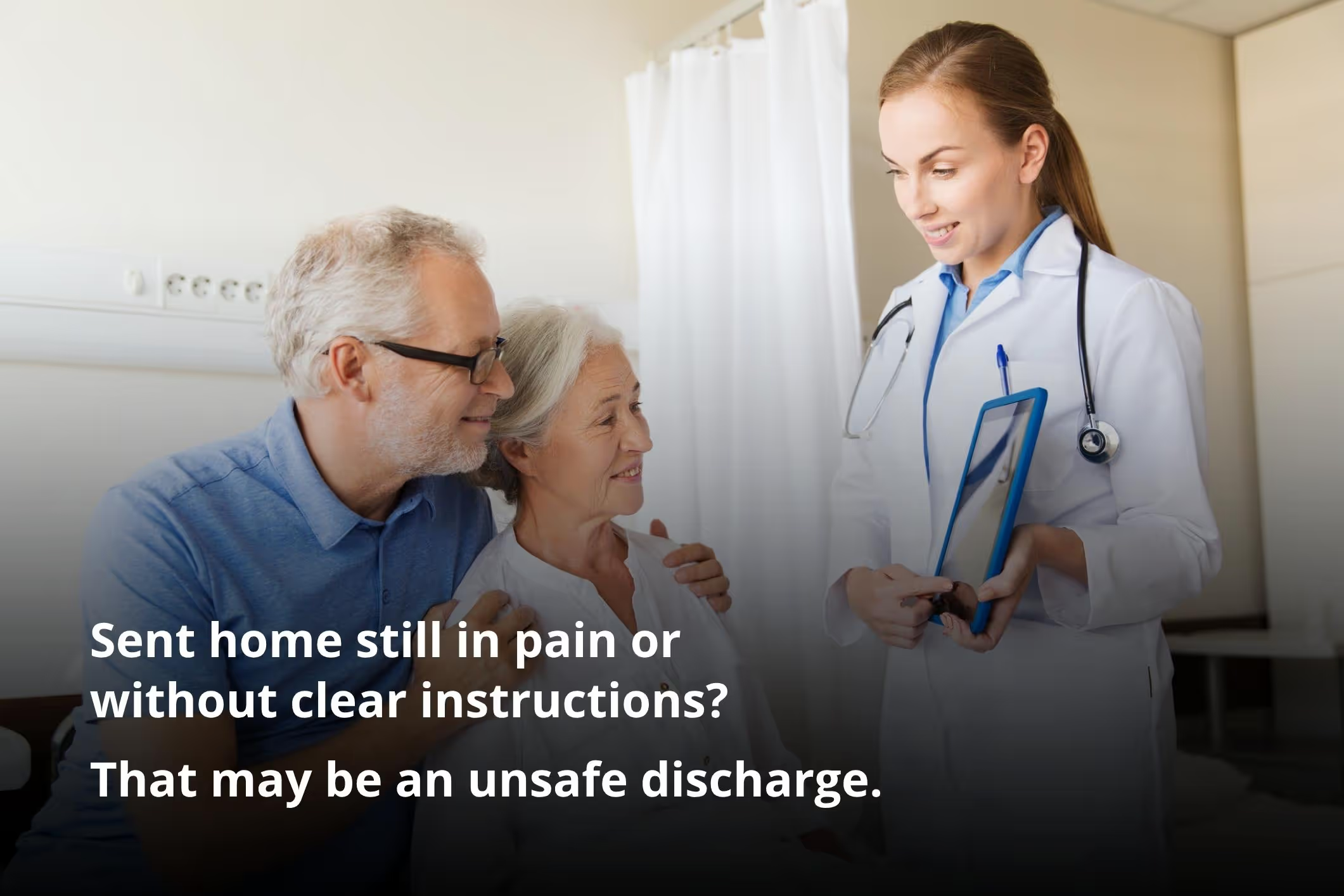
When you leave the hospital, you should feel ready and have the guidance and support you need to recover safely. When that does not happen, it can be overwhelming, confusing, and even frightening.

Some patients go home too soon or without clear instructions or resources. This can cause worsening symptoms, complications, medication errors, or a return to the hospital.
If your health declined or you quickly returned to the hospital, you may be experiencing an unsafe discharge. You may also be asking what is an unsafe discharge from hospital care and whether it should have happened this way.
Hodes Milman can help. Call (949) 640-8222 for a free, confidential case review to discuss your situation and next steps.
Why Do Unsafe Hospital Discharges Happen?
For many patients, the decision to go home can feel sudden. You may still be in pain, waiting on test results, or unsure how you will manage once you leave, yet you are told it is time to go.
During your stay, the hospital is constantly moving. New patients arrive, beds are limited, and care teams are responsible for many people at once. In that environment, you may be discharged while still dealing with unresolved symptoms or without a full understanding of your condition.
As you prepare to leave, conversations can feel rushed. Instructions may be explained quickly, your questions may not be fully answered, and important details can be difficult to take in. You may walk out unsure what to do next or which warning signs to watch for.
Leaving without enough guidance makes recovery harder. Complications might be missed, medication errors can happen, and small issues can escalate, often resulting in a quick return to the hospital in worse condition.
What Are Examples of Unsafe Hospital Discharges?
You go home expecting to recover, but the symptoms that brought you in are still there, without clear answers or a sense of what is normal and what is not.
Situations like the following often point to an unsafe discharge:
- Chest pain discharged without a full heart evaluation. You go to the ER with chest pain, are sent home, and the pain returns because the heart issue was not fully checked.
- Active infection or sepsis without stabilization. You leave the hospital still feverish, weak, or unwell. Without treatment, the infection spreads and worsens.
- Head injury without proper checks. After a head injury, you are sent home, then develop new symptoms without imaging or observation.
- Post-surgery discharge with unresolved issues. You go home in pain, unsure about your condition, with developing complications.
- Newborn or postpartum discharge with missed warning signs. You or the baby go home with lingering symptoms that were not fully checked.
- Elderly or complex patients without a safe transition. You or a loved one goes home unsupported, making care unmanageable, and problems escalate.
Hospitals are expected to discharge patients only when it is safe to do so. When a patient is harmed after leaving the care setting, it may reflect a failure in care. Many people in this situation start asking what is considered an unsafe discharge from a hospital and whether it should have been handled differently.
Hodes Milman has recovered more than $400 million for people harmed by medical negligence, including unsafe discharge decisions. You can reach us at (949) 640-8222 or through our online contact form.
What Must Be Included in a Proper Hospital Discharge Plan?
Leaving the hospital comes with a lot to manage. You are recovering and expected to handle medications, follow-up care, and changes to your routine.
A proper discharge plan gives you what you need to do that safely:
- Medication instructions. A complete list of medications, including any new prescriptions, how much to take, when to take them, and what has changed from what you were taking before.
- Follow-up appointments. Scheduled visits with specific dates, times, and contact information, not a general reminder to check in with a doctor.
- Written care instructions. Clear guidance on wound care, equipment, activity limits, and diet that you can refer back to at home.
- Discharge destination and support services. A plan for where you are going next, along with any services or equipment already arranged, whether that is home health care, therapy, or mobility support.
- Emergency contact information. Direct numbers to call with questions, and when symptoms require urgent care or a return to the ER.
- Patient and caregiver education. Time to ask questions and leave with a solid understanding of how to manage care at home.
If you were left to manage your recovery without clear guidance, consider consulting a hospital negligence attorney to evaluate whether your discharge followed appropriate procedures.
When Does a Hospital Discharge Become Negligence?
You may be dealing with a difficult recovery and wondering whether it should have happened this way. The question is whether you were sent home when it was still unsafe to leave, or without what you needed to manage your care.
Discharge becomes negligence when you're still medically unstable, test results are pending, instructions are unclear, or decisions are based on a misdiagnosis. In these situations, you face risks from decisions that should have been different.
Under California medical malpractice law, hospitals and care providers are required to adhere to the professional standard of care. The focus is on what was known at the time of discharge, what steps were taken before you were sent home, and whether your condition worsened as a result.
Can You Refuse to Be Discharged From a Hospital?
If you are being told it is time to go home and something does not feel right, you are allowed to speak up. You do not have to agree to a discharge that feels unsafe, especially if you are still in pain, waiting on results, or unsure how you will manage your care once you leave.
When you raise concerns, the hospital is required to respond. That can include a review of the discharge decision or an appeal through your insurance. You may feel pressure to leave or be told that everything is in place when it does not feel that way to you.
In that moment, ask to speak with the hospital's patient advocate. Request that your concerns be documented in writing. Contact your insurance company to ask about your right to an expedited appeal. If a family member or caregiver is present, involve them in the conversation so there is a witness to the communication.
What to Do If You Were Already Discharged Unsafely
Being home and still in pain, getting worse, or noticing new symptoms can make it hard to tell what is part of recovery and what is not. Start by getting the care you need. Do not wait if symptoms are changing or worsening.
At the same time, it helps to start keeping track of what happened:
- Get medical care if symptoms continue or worsen, including returning to the ER, seeing your doctor, or going to urgent care.
- Request your medical records. Ask for discharge paperwork, nursing notes, and any lab or imaging results from around the time you were sent home.
- Write down what you remember. Include the symptoms you reported, what you were told, what instructions you received, and how your condition changed after discharge.
- Keep records of follow-up care. Save information from appointments, prescriptions, bills, and any additional treatment related to your recovery.
- Note anything that did not make sense at the time. This can include unclear instructions, unanswered questions, or symptoms that were not addressed before you left.
These details can help explain how the hospital discharge was handled and what led to your condition getting worse.
Can You Sue a Hospital for Unsafe Discharge?
In some situations, yes. When a hospital sends you home too soon or without what you need to recover safely and your condition gets worse, there may be a basis for a claim. An unsafe discharge from a hospital lawsuit focuses on how that decision was made and what happened afterward.
These cases come down to three questions:
- Did it make sense to discharge you at that time? Based on your symptoms, test results, and overall condition, a careful provider should not have sent you home.
- Did your condition worsen because you were discharged? The decline needs to be tied to the timing or handling of the discharge, not just to the condition you were already facing.
- Did the discharge lead to real consequences? This can include another hospital stay, additional treatment, lost income, or lasting health issues that could have been avoided.
If your condition worsened because of an unsafe discharge, you may be entitled to legal recovery. Hodes Milman can help assess your rights and hold hospitals accountable when discharge decisions cause harm. Contact us to learn about the legal options available.
How Hodes Milman Protects Patients and Families
Hospitals have teams in place to protect their interests. Contact us today to ensure someone is also looking out for you.
Hodes Milman brings more than 100 years of combined experience and has recovered over $400 million for people harmed by medical negligence across Southern California. When a discharge decision leads to preventable harm, we take action to hold the hospital accountable.
If you were sent home before it was safe and your condition got worse, call (949) 640-8222 or reach out to us online. Our hospital negligence attorneys can meet you at home, in a care facility, or wherever is easiest for you.
%201.avif)







Dan Hodes treated me like a human being, not just another client. He showed me he cared by how hard he worked on my case.
My daughter was born with a disability due to doctor neglect. I emailed over 200 lawyers over a 2 year time span. I had ONE lawyer believe in my case and he worked with Jeff Milman over the next year helping build my case. Jeff won my case and I cannot thank him enough for believing in me!! He was so pleasant to work with and professional. I will forever be thankful to him and his team!
They are friendly and honest and fought for what they believed was best in our interest.
Proudly Representing California Residents
Your life changed in an instant. Getting justice shouldn’t wait. Connect with Hodes Milman today and put a proven team to work on your case.