
Nursing Home Abuse: Don't Believe the Myths
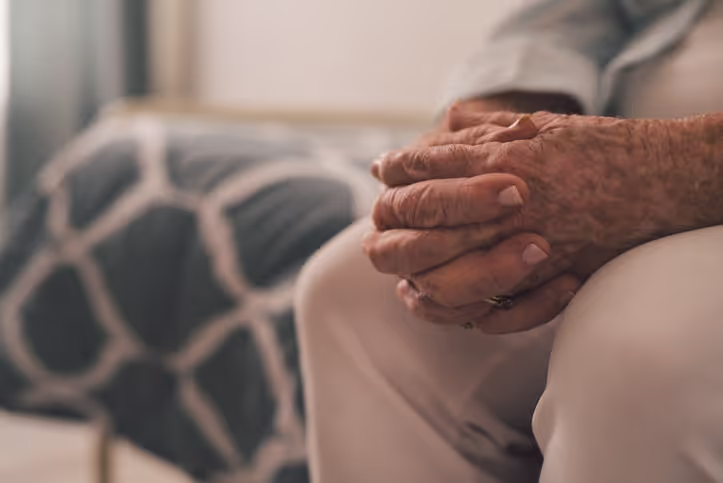
When older adults become less able to care for themselves, loved ones choose a residential care facility they hope will be a good option for safe, supervised living. The vast majority of elder care facilities are run by well-trained, compassionate staff with a genuine dedication to the people they serve.
Unfortunately, there are still those who use their positions of power to mistreat the vulnerable people in their care. No one likes to think about abuse in nursing homes. It would be unwise, however, to ignore alarming statistics published by the National Council on Aging:
- 1 in 10 Americans aged 60+ have experienced some form of elder abuse
- As many as 5 million elders may be abused each year
- Only 1 in 14 cases of abuse are reported to authorities
Is someone you know the subject of abuse, but you're not sure how to protect them? We understand. A pool of myths continues to surround nursing home abuse. You need reliable information from a trusted source to understand your options. The attorneys at Hodes Milman want you to have the facts and know your rights.
5 Common Misconceptions About Elder Abuse
What is elder abuse? The Centers for Disease Control and Prevention defines it like this: "Elder abuse is an intentional act or failure to act, by a caregiver or another person in a relationship involving an expectation of trust that causes or creates a risk of harm to an older adult."
As common as elder abuse is, certain misconceptions about it continue to exist:
- Elder abuse happens only at home. Elder abuse can happen anywhere to anyone. Individuals can be at risk in a variety of institutional settings such as long-term care facilities, physicians' offices, senior centers, and wherever they find themselves alone with others.
- Family members are most likely to be abusers. Paid caregivers may prey upon patients, as well as strangers such as delivery people.
- Nursing home abuse is inevitable because patients are difficult and unyielding. Caregivers have stressful jobs and patients can be extremely hard to work with. However, this does not excuse poor treatment of even the most difficult resident.
- No bruises mean no abuse. Emotional abuse, neglect, and other forms of abuse may not leave bruises, but the mental and emotional trauma runs deep.
- Men don't need to worry about abuse in nursing homes. Both genders are at risk for abuse, especially if they have cognitive impairments.
Abuse in Nursing Homes Takes Many Forms
Instances of elder abuse include:
- Physical Abuse - being hit, slapped, pinched, or caused to endure unnecessary pain
- Sexual Abuse - being forced to watch or participate in sexual acts
- Emotional/Psychological Abuse - being isolated, ignored, threatened, or bullied
- Neglect - receiving little or no attention for personal needs, including hygiene and nutrition
- Financial Abuse - being robbed of cash, checks, retirement and Social Security benefits, etc.
Because patients are vulnerable to mistreatment in many ways, elder abuse laws have been created to protect them. There are criminal and civil remedies available to anyone who has been victimized by a caregiver.
Who is to blame? Often, the core problems are carelessness and inattention on behalf of the management. Lack of governmental oversight may also be at fault. Sometimes abuse is a crime of opportunity, other times it is premeditated. Regardless of the cause, when concern for profit overrides concern for patients, it is a prescription for nursing home abuse.
Physical & Behavioral Signs of Elder Abuse
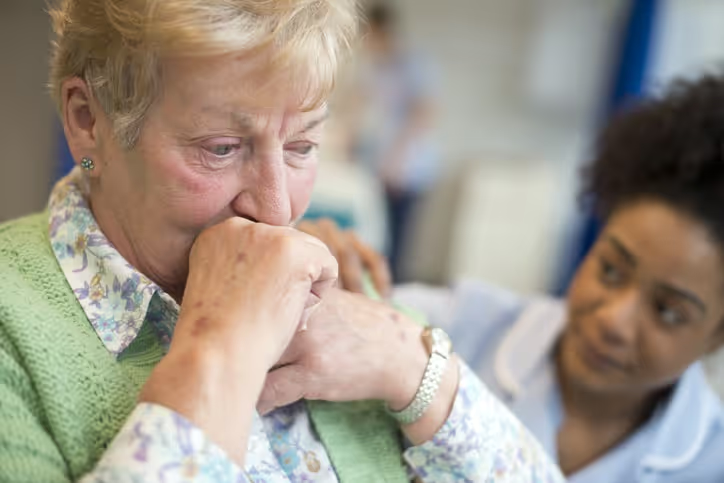
Signs of elder abuse are not always easy to spot. Victims may be unwilling to articulate what is happening to them or too frightened to reveal the source of the abuse. You should consider consulting an elder abuse attorney if you observe a person who:
- Has burns, cuts, welts, or bruises that are inconsistent with the patient's daily life or typical health conditions
- Is malnourished or dehydrated, unrelated to a medical condition
- Becomes uncharacteristically agitated, depressed, or angry
- Becomes withdrawn
- Makes contradictory statements when asked about physical injuries
- Is furtive or fearful when discussing injuries
What Not to Do If You Suspect Nursing Home Abuse
Is someone crying out to you for help? Have you seen warning signs of elder abuse? If so, you must act quickly but wisely. If you are unsure about your observations, an attorney can help evaluate the situation.
The American Psychological Association report Elder Abuse & Neglect: In Search of Solutions recommends the following:
- Do not allow fear of meddling prevent you from reporting your suspicions to authorities
- Do not confront the abuser directly unless you can immediately move the victim to a safe place. This can put the victim in harm's way.
What You Can Do About Abuse in Nursing Homes
An experienced elder abuse attorney is your best weapon in your battle for the rights of an abused parent, grandparent, or other older loved one. The attorneys at Hodes Milman are knowledgeable, experienced, and ready to advocate for you. Let us help you navigate the specifics of elder abuse law and contact the authorities. We invite you to schedule a free consultation today by filling out this brief web form or contacting us at (949) 640-8222.
%201.avif)







Dan Hodes treated me like a human being, not just another client. He showed me he cared by how hard he worked on my case.
My daughter was born with a disability due to doctor neglect. I emailed over 200 lawyers over a 2 year time span. I had ONE lawyer believe in my case and he worked with Jeff Milman over the next year helping build my case. Jeff won my case and I cannot thank him enough for believing in me!! He was so pleasant to work with and professional. I will forever be thankful to him and his team!
They are friendly and honest and fought for what they believed was best in our interest.
Proudly Representing California Residents
Your life changed in an instant. Getting justice shouldn’t wait. Connect with Hodes Milman today and put a proven team to work on your case.