
What Are the Most Dangerous Surgeries?
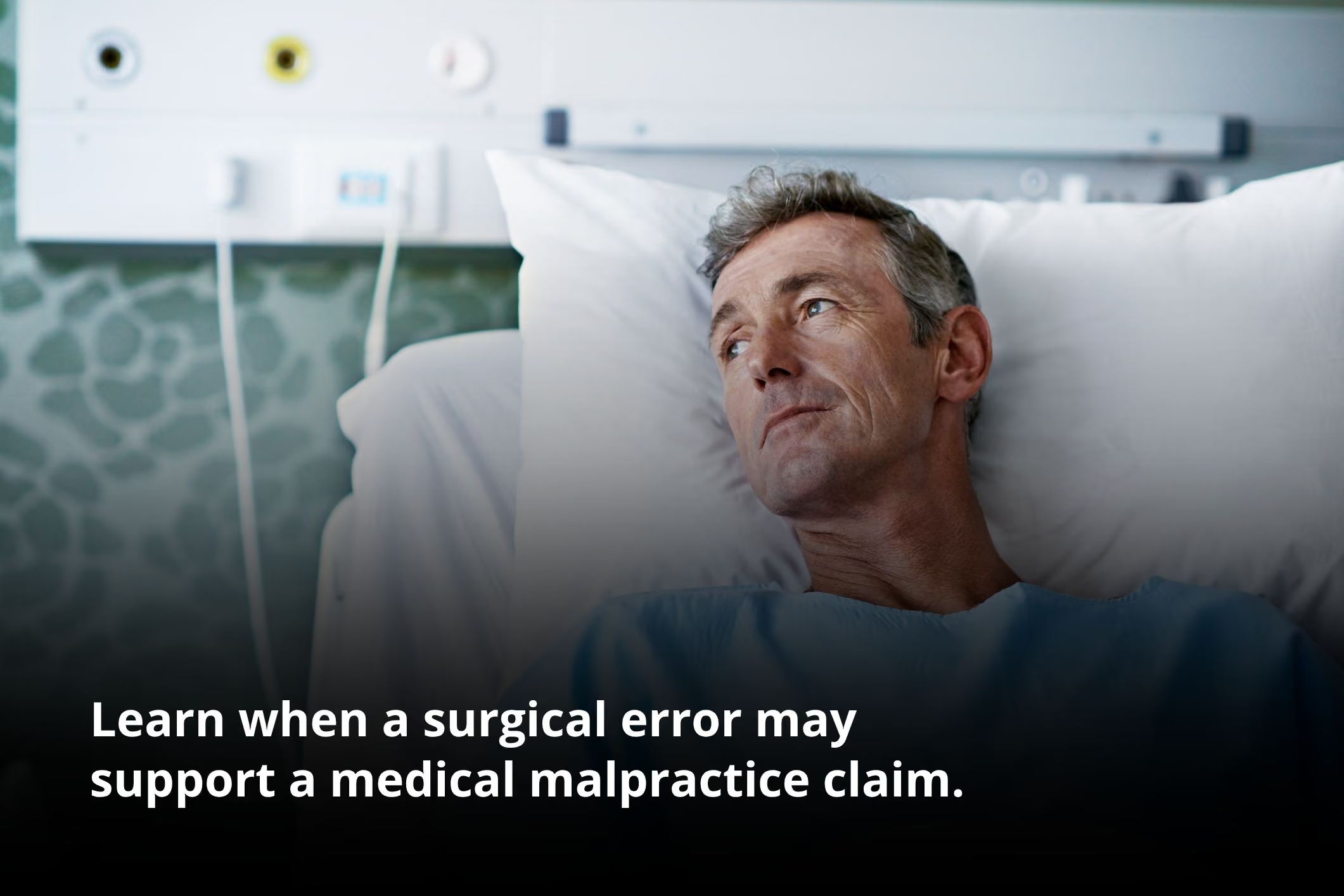
Some operations involve life-or-death stakes, and when one goes wrong, you may be left wondering whether the harm was an accepted risk or a preventable mistake. The most dangerous surgeries leave the smallest margin for error, so a surgeon's mistake during one can be devastating.
Not every bad result is malpractice. A surgical error that fell below the accepted standard of care is a different matter, and it may give you grounds for a claim.
This post ranks eight of the highest-risk surgeries, explains what makes each one dangerous, and lays out the errors that lead to malpractice claims.
If a surgical error left you or a loved one with severe injuries, Hodes Milman can help. In more than 30 years handling California medical malpractice cases, the firm has recovered over $250 million for injured patients. Call (949) 640-8222 for a free case review.
What Makes a Surgery Dangerous?
A surgery's danger comes down to a few factors:
- Complexity: intricate procedures leave more chances for something to go wrong.
- Blood loss: heavy bleeding strains the heart and other organs.
- Organs involved: operations on the brain, heart, or major vessels bring the steepest stakes.
- Urgency: emergency surgery gives the team little time to prepare.
- Patient health: age, heart function, and conditions like diabetes shift the odds.
Emergency operations are far more dangerous than planned ones, since the team has less time to prepare and the patient is often unstable. These conditions also make mistakes more likely, and a mistake that a careful surgeon would have avoided can be malpractice.
8 of the Riskiest Surgeries and the Errors Behind Them
Patients often ask what are the most dangerous surgeries, and the eight operations below appear on nearly every list. Each leaves little room for error, and a preventable mistake during one can be life-altering. The entries explain what makes each surgery dangerous and the errors that most often lead to malpractice claims.
1. Thoracic Aortic Dissection Repair
This emergency operation repairs a tear in the aorta, the body's largest artery. Mortality in the days after surgery can reach 20 to 30 percent, among the highest of any procedure. Because the warning signs mimic less urgent problems, a delayed or missed diagnosis in the emergency room is one of the most frequent errors tied to this condition, and every hour of delay raises the danger.
2. Craniectomy (Brain Surgery)
A craniectomy removes part of the skull to relieve pressure on a swelling brain, often after a trauma or stroke. Working directly on brain tissue under urgent conditions brings a high risk of bleeding, infection, and lasting neurological damage. A failure to monitor brain pressure, control infection, or operate in time can be the basis of a malpractice claim.
3. Whipple Procedure (Pancreaticoduodenectomy)
This abdominal operation removes the head of the pancreas along with parts of the intestine and bile duct, usually to treat pancreatic cancer. The 30-day mortality sits near 3 percent at experienced centers, yet 30 to 50 percent of patients face complications such as leaks and severe infections.
Complication rates fall sharply at high-volume hospitals, so a missed leak after surgery can point to a team that was not equipped for the procedure.
Not every surgical complication results from negligence. Some do. If you suspect a preventable error, Hodes Milman works on contingency, so you pay nothing unless the firm wins your case. Reach us online or at (949) 640-8222 for a free consultation.
4. Esophagectomy
Removing part or all of the esophagus, usually for cancer, ranks among the toughest gastrointestinal surgeries. Rebuilding the connection between the stomach and the remaining esophagus invites leakage and infection, and in-hospital mortality can range from 5 to 10 percent. A leak at that connection that goes unrecognized for too long is a known source of preventable harm.
5. Coronary Artery Bypass Graft (CABG)
Open-heart bypass surgery reroutes blood around blocked arteries. It is performed often and usually with success, with a 30-day mortality near 1.5 percent, though that figure climbs for women, older patients, and people with diabetes or kidney disease.
Anesthesia mistakes, retained instruments, and failure to monitor a patient after surgery are recurring sources of malpractice claims in cardiac cases.
6. Organ Transplants
Liver, lung, and heart transplants save lives, though they bring a high risk of rejection, infection, and post-operative failure, with death rates that can reach double digits for lung and heart recipients. Donor-recipient matching errors and poor monitoring after surgery are well-documented forms of negligence.
7. Complex Spinal Fusion
Fusing five or more vertebrae has a lower death rate than the procedures above, though the stakes stay steep. Spinal cord injury occurs in roughly 0.7 percent of complex cases and nerve damage in about 1.3 percent. Wrong-level surgery and misplaced hardware are well-documented errors that can leave a patient with permanent loss of movement or feeling.
8. Bladder Removal (Radical Cystectomy)
Surgeons perform a radical cystectomy to treat invasive bladder cancer, removing the bladder and nearby lymph nodes and, in some cases, neighboring organs. More than half of patients face a complication within 90 days. Damage to neighboring organs and an unrecognized infection after surgery are frequent ways care falls below the standard.
Which Surgery Has the Highest Death Rate?
If you are wondering what is the most dangerous surgery, thoracic aortic dissection repair tops this list, with mortality reaching 20 to 30 percent. The danger comes from the emergency nature of the tear and the pressure inside the aorta, which leaves surgeons almost no margin for error.
Even so, ranking the most dangerous surgeries is not an exact science. A high-risk procedure handled with skill can succeed, while a lower-risk one handled carelessly can end in tragedy.
Surgeon experience and hospital volume matter enormously, since centers that perform these operations regularly tend to report lower complication and death rates. When the result falls outside what skilled care would produce, you have reason to ask whether an error was to blame.
When Does a Surgical Error Become Malpractice?
A surgical error becomes malpractice when the surgeon or care team fails to meet the accepted standard of care and a patient is harmed as a result. Surgery always involves accepted risks that you consent to ahead of time, so the law looks closely at whether your harm came from one of those risks or from a provider's mistake.
At Hodes Milman, our attorneys review your records, consult with medical experts in the relevant specialty, and determine whether negligence contributed to the harm. Surgical errors that may support a claim include:
- Operating on the wrong site or the wrong patient,
- Leaving instruments or sponges inside the body,
- Anesthesia dosing errors,
- Damage to nearby organs or nerves, and
- Failure to monitor or respond to complications after surgery.
When a provider falls short of that standard, a claim can pursue compensation for additional treatment, lost income, pain, and the long-term care you may need. In California, these claims fall under the Medical Injury Compensation Reform Act, or MICRA, which sets a short filing deadline and caps certain damages.
Speaking with an attorney soon after you suspect an error gives your legal team time to secure records and consult the right specialists.
Contact Us Today
A dangerous surgery is hard enough without facing the impact of a preventable error alone. Hodes Milman has handled surgical malpractice claims throughout California and knows how MICRA's deadlines and damage caps affect what you can recover.
If you believe a surgical mistake caused your injury, call (949) 640-8222 or reach out online for a free, confidential consultation.
%201.avif)







Dan Hodes treated me like a human being, not just another client. He showed me he cared by how hard he worked on my case.
My daughter was born with a disability due to doctor neglect. I emailed over 200 lawyers over a 2 year time span. I had ONE lawyer believe in my case and he worked with Jeff Milman over the next year helping build my case. Jeff won my case and I cannot thank him enough for believing in me!! He was so pleasant to work with and professional. I will forever be thankful to him and his team!
They are friendly and honest and fought for what they believed was best in our interest.
Proudly Representing California Residents
Your life changed in an instant. Getting justice shouldn’t wait. Connect with Hodes Milman today and put a proven team to work on your case.