
Migraine vs. Stroke: When a Missed Stroke May Be Medical Malpractice
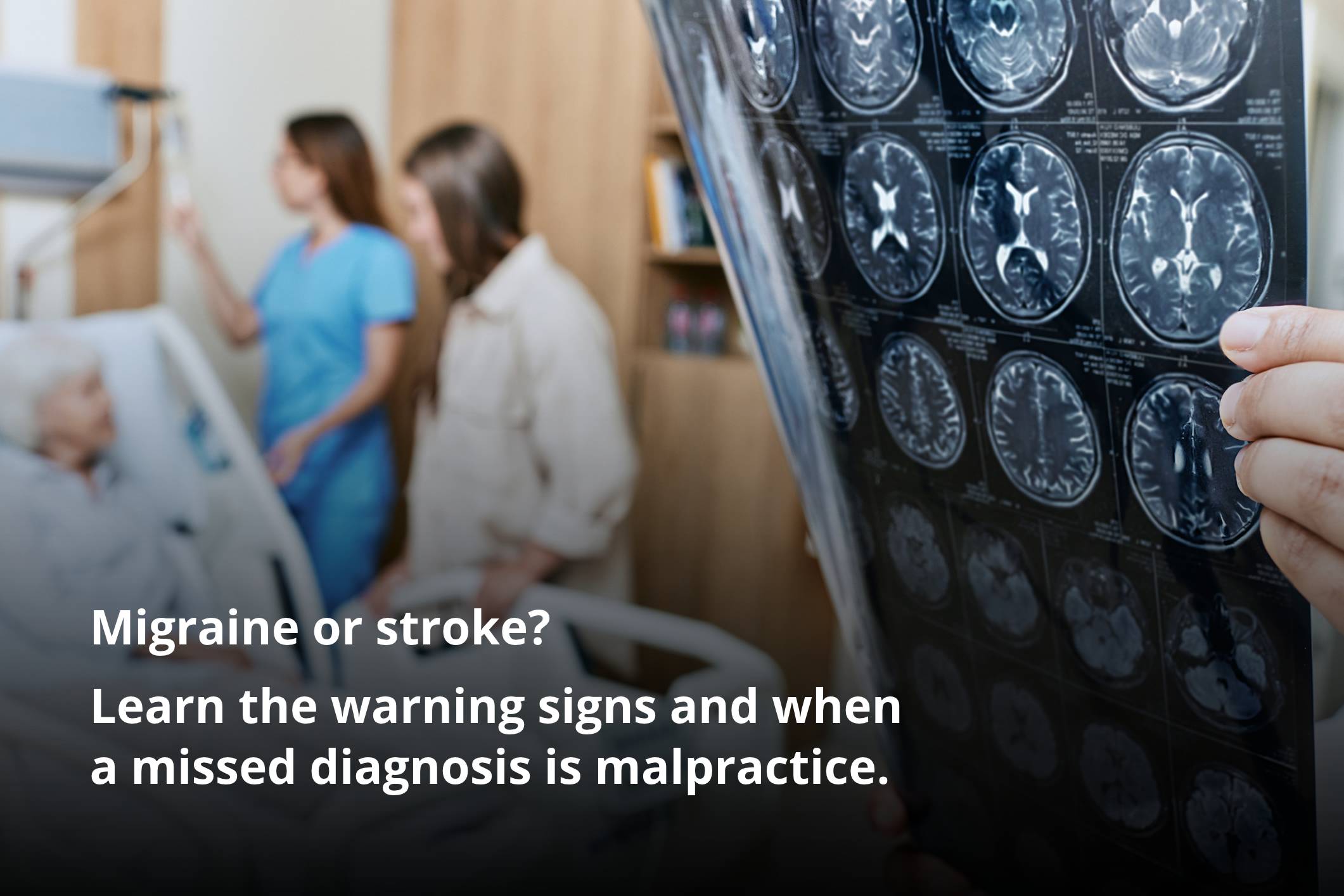
A sudden headache. Blurred vision. Numbness in one arm. You go to the emergency room, worried that something is seriously wrong, but the doctor tells you it's a migraine and sends you home.
Hours later, you're back in the hospital. This time, doctors diagnose a stroke.
Migraines and strokes share several symptoms, which makes distinguishing between them difficult. But a stroke is a medical emergency, and a delayed diagnosis can mean the difference between recovering with treatment and living with permanent brain damage.
So how do doctors tell the difference between a migraine vs. stroke? And when does sending someone home with the wrong diagnosis become medical malpractice?
If you or a loved one suffered permanent injuries after a stroke was mistaken for a migraine, Hodes Milman investigates medical errors that result in serious harm. Call (949) 640-8222 or contact us online for a free consultation.
Migraine vs. Stroke: Why Are They So Easily Confused?
A migraine is a neurological condition that causes recurring headaches and other symptoms. Some people experience migraine aura, which produces temporary changes in vision, sensation, or speech.
A stroke occurs when blood flow to the brain is blocked or a blood vessel ruptures. Without adequate blood flow, brain cells begin to die.
Both conditions share symptoms, including:
- Severe headache
- Blurred vision or visual disturbances
- Numbness or tingling
- Difficulty speaking
- Dizziness or loss of balance
- Nausea and vomiting
The overlap between a stroke vs. migraine becomes dangerous when doctors assume a patient is experiencing a migraine without investigating signs of a stroke.
How Do You Tell the Difference Between a Stroke vs. Migraine?
One of the biggest clues is how symptoms develop. Migraine aura often develops gradually over several minutes, while stroke symptoms frequently appear suddenly.
Doctors look for several differences:
- Headache: Migraines frequently cause throbbing pain, nausea, and light sensitivity. Strokes sometimes cause headaches, including sudden, severe pain associated with bleeding in the brain.
- Vision changes: Migraine aura can cause flashing lights or blind spots that develop gradually. A stroke may cause sudden vision loss.
- Numbness and tingling: Migraine symptoms often spread gradually. Stroke-related numbness frequently appears suddenly on one side of the body.
- Muscle weakness: Sudden weakness is a major stroke warning sign. Certain migraines, including hemiplegic migraines, cause temporary weakness.
- Speech difficulties: Both conditions can interfere with speech, but sudden slurring or difficulty finding words needs immediate evaluation.
- Dizziness and balance problems: Migraines sometimes cause vertigo, while strokes affecting the brainstem or cerebellum can cause severe dizziness and difficulty walking.
Certain strokes develop gradually, and migraines sometimes closely resemble strokes. Sudden weakness, facial drooping, speech difficulties, or other new neurological symptoms are medical emergencies. Call 911 immediately.
When Is a Stroke Mistaken for a Migraine?
A younger patient arrives at the emergency room with dizziness and a headache. Because they have a history of migraines, the physician attributes the symptoms to another migraine attack.
But the patient is experiencing a stroke affecting the back of the brain.
Strokes in the posterior circulation are difficult to identify because symptoms often include dizziness, nausea, headache, and balance problems. Diagnostic errors can occur when:
- Neurological symptoms are dismissed: Weakness, difficulty walking, or speech changes receive an incomplete evaluation.
- A migraine history influences the diagnosis: Doctors attribute unfamiliar symptoms to an existing condition.
- Imaging is misinterpreted: Early ischemic strokes, particularly in the posterior circulation, may be difficult to detect on CT.
- Additional testing is delayed: A patient with continuing symptoms is discharged without appropriate imaging or specialist assessment.
- Symptoms are attributed to age: A younger patient's stroke symptoms are mistaken for migraine because the physician assumes stroke is unlikely.
A normal initial CT scan doesn't rule out every ischemic stroke. Further evaluation may be needed when clinical findings suggest a stroke.
What Tests Should Doctors Use to Rule Out a Stroke?
Emergency physicians assess neurological findings, medical history, and when symptoms began. Testing may include:
- Neurological examination: Checking strength, sensation, speech, coordination, and balance.
- CT scan: Looking for bleeding and other brain abnormalities.
- CT angiography: Identifying blood vessel blockages.
- MRI: Detecting ischemic injuries that are difficult to identify on CT, although early MRI scans have limitations.
- Blood glucose testing: Identifying low blood sugar, which can mimic stroke symptoms.
Doctors also assess eligibility for time-sensitive treatments, including clot-dissolving medication and mechanical thrombectomy. The American Stroke Association emphasizes recognizing stroke symptoms quickly because emergency treatment is time-sensitive.
When Does a Stroke Misdiagnosed as a Migraine Become Medical Malpractice?
A stroke misdiagnosis isn't automatically malpractice. Migraines sometimes closely resemble strokes, and doctors make decisions based on the information available during the emergency visit.
A medical malpractice claim focuses on whether the medical team failed to provide the accepted standard of care and if that failure caused a preventable injury.
Examples of potential negligence include:
- Discharging a patient despite unexplained weakness or speech difficulties
- Failing to investigate documented neurological abnormalities
- Misreading imaging that showed evidence of a stroke
- Delaying appropriate testing or specialist evaluation
- Failing to act on worsening symptoms
Medical experts review the timeline to determine if earlier diagnosis would have allowed effective treatment or reduced the extent of brain damage.
Were you sent home with a migraine diagnosis, only to learn later that you had suffered a stroke? Hodes Milman investigates delayed diagnoses and medical errors that cause permanent injuries. Call (949) 640-8222 for a free consultation.
What Happens When Doctors Miss the Window for Stroke Treatment?
Stroke treatment is time-sensitive because brain tissue continues to suffer damage when blood flow is interrupted.
The American Heart Association's 2026 stroke guidelines identify treatments for eligible patients, including intravenous clot-dissolving medication and mechanical thrombectomy. Eligibility is based on the type of stroke, imaging findings, symptom onset, and the patient's condition.
When a stroke is mistaken for a migraine, the patient may lose access to treatment available during the initial emergency visit.
A delayed diagnosis can lead to:
- Permanent weakness or paralysis
- Speech and language difficulties
- Memory loss and cognitive impairment
- Vision problems
- Difficulty walking or maintaining balance
- Long-term rehabilitation and personal care needs
Medical experts compare the patient's condition at the first hospital visit with findings from the eventual diagnosis to determine how the delay affected recovery.
What Evidence Is Needed for a Missed Stroke Malpractice Claim?
Emergency department records document the patient's symptoms, examination findings, test results, and decisions made before discharge.
A review of a stroke misdiagnosis case may include:
- Emergency room triage notes
- Neurological examinations and stroke screening results
- CT scans, MRI studies, and radiology reports
- Physician orders and consultation records
- Medication administration records
- Discharge instructions
- Records from the hospital that diagnosed the stroke
- Rehabilitation records documenting permanent injuries
The timing is critical. If a patient reported arm weakness at 10 a.m., was discharged with a migraine diagnosis at noon, and returned with a confirmed stroke that evening, experts would review what the first hospital knew and which treatments were available during that earlier visit.
What Compensation Is Available After a Missed Stroke Diagnosis?
A missed stroke can change a person's ability to work, communicate, walk, or perform everyday activities. Families may face extensive medical bills while arranging rehabilitation and long-term assistance.
A successful malpractice claim may provide compensation for:
- Past and future medical expenses
- Physical, occupational, and speech therapy
- Lost wages and reduced earning capacity
- Long-term nursing or in-home assistance
- Mobility equipment and home modifications
- Physical pain and emotional suffering, subject to California law
When a delayed stroke diagnosis results in death, surviving family members may have grounds for a wrongful death claim.
Was Your Stroke Mistaken for a Migraine?
Being told you have a migraine when you're actually experiencing a stroke can cost valuable treatment time. For patients left with permanent disabilities, the question is what would have happened if the emergency department had identified the stroke during the first visit.
Hodes Milman has decades of experience investigating medical malpractice and delayed diagnosis claims. Founding partner Daniel Hodes has spent nearly 40 years handling cases involving serious medical errors and catastrophic injuries.
If you or a loved one suffered permanent injuries after a stroke was misdiagnosed as a migraine, call (949) 640-8222 or contact Hodes Milman online for a free consultation.







Dan Hodes treated me like a human being, not just another client. He showed me he cared by how hard he worked on my case.
My daughter was born with a disability due to doctor neglect. I emailed over 200 lawyers over a 2 year time span. I had ONE lawyer believe in my case and he worked with Jeff Milman over the next year helping build my case. Jeff won my case and I cannot thank him enough for believing in me!! He was so pleasant to work with and professional. I will forever be thankful to him and his team!
They are friendly and honest and fought for what they believed was best in our interest.
Proudly Representing California Residents
Your life changed in an instant. Getting justice shouldn’t wait. Connect with Hodes Milman today and put a proven team to work on your case.