
Breast Cancer Misdiagnosis Data Report

Hard Data on Race, Geography, Age, Follow-Up Failures, and Diagnostic Risk
Prepared as a research foundation for a breast cancerdiagnostic-delay awareness project
Executive Finding: The strongest data does not always use the word 'misdiagnosis.' Instead, the reliable evidence usually measures delayed diagnosis, missed follow-up after abnormal mammography, false-negative diagnostic mammograms, delayed biopsy, interval cancers, later-stage diagnosis, and malpractice claims. Taken together, those sources point to the same conclusion: breast cancer diagnostic failure is often a follow-up failure, and the burden falls hardest on Black women, younger women, rural patients, uninsured or underinsured patients, and women treated in systems that lack reliable diagnostic tracking.
Contents
1. Executive summary
2. How this report defines breast cancer misdiagnosis
3. Race and ethnicity: who faces the highestdiagnostic-failure risk
4. Geography: rural vulnerability and regional risk
5. Age: younger women, screening gaps, and false-positivefatigue
6. Clinical and health-system factors
7. Malpractice data and litigation patterns
8. Bottom-line data points and usable messaging
9. Source list
1. Executive Summary
The available data supports five practical conclusions:
• Black women show the strongest and most consistent evidence of breast cancer diagnostic failure. Across studies, Black women experience higher diagnostic delay, higher biopsy delay, lower same-day diagnostic follow-up, higher false-negative diagnostic mammography rates, later-stage diagnosis, and higher breast cancer mortality.
• Rural women are more vulnerable to advanced-stage diagnosis, especially in parts of the South. The strongest geographic data identifies elevated stage 4 risk among rural women in East South Central and West South Central states.
• Younger women, especially those under 50, face a different diagnostic-risk profile. They are less likely to fall into long-established screening pathways, more likely to present symptomatically, more likely to have dense breasts, and are overrepresented in delayed-diagnosis malpractice claims.
• The failure point is often after the abnormal mammogram. Diagnostic imaging, biopsy, referral, communication, and patient reattendance determine whether screening actually leads to timely diagnosis.
• Misdiagnosis should be framed as a systems problem, not just a bad read. The best-supported public-facing framing is that breast cancer diagnostic failures often occur when health systems fail to close the loop after abnormal results or breast symptoms.
2. How This Report Defines Breast Cancer Misdiagnosis
The word 'misdiagnosis' can mean several different things in breast cancer research and litigation. The strongest datasets rarely use the term as a standalone category. For a reliable report, it is better to define breast cancer misdiagnosis as a cluster of measurable diagnostic failures:
• A cancer missed on screening or diagnostic imaging, including false-negative mammography.
• Failure to order appropriate diagnostic imaging or biopsy after symptoms or an abnormal mammogram.
• Failure to refer the patient to a surgeon, breast specialist, or diagnostic workup pathway.
• Failure to communicate abnormal results or recommended follow-up.
• Failure to track whether the patient completes recommended short-interval follow-up, diagnostic imaging, or biopsy.
• A delayed diagnosis that permits cancer to progress to a later stage.
For that reason, this report uses 'diagnostic failure' as the umbrella term and distinguishes between malpractice evidence, direct diagnostic-accuracy evidence, and proxy outcomes such as late-stage diagnosis.
3. Race and Ethnicity: Who Faces the Highest Diagnostic-Failure Risk?
Short answer: Black women face the strongest and most consistent evidence of breast cancer diagnostic failure. The evidence includes delayed diagnostic evaluation, biopsy delay, lower same-day diagnostic follow-up, higher false-negative diagnostic mammography rates, later-stage diagnosis, and substantially higher mortality.
Black women: strongest evidence of risk
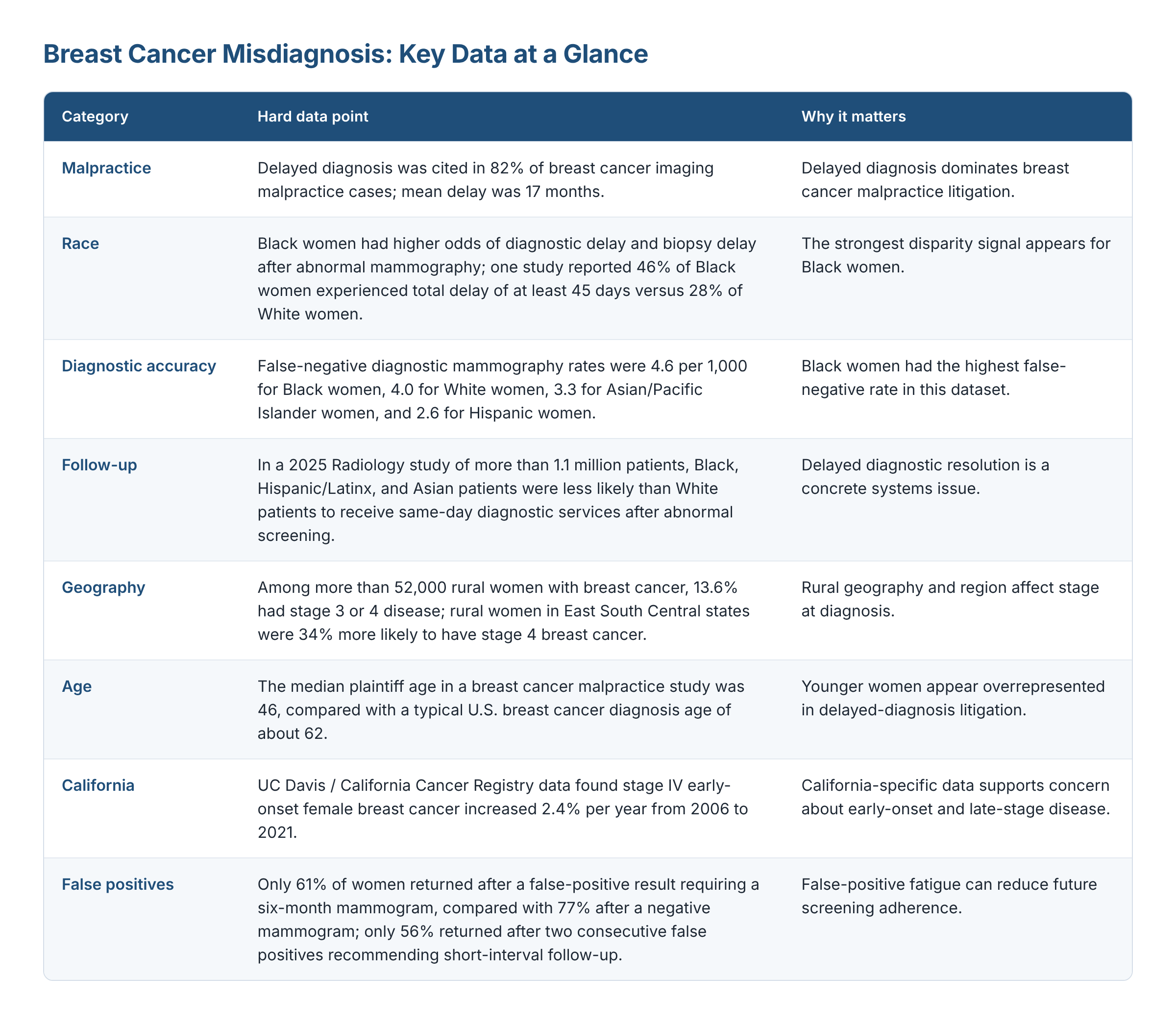
A study of diagnostic delay after abnormal mammography found Black women were more likely than White women to experience delay at nearly every step. Black women had almost twice the odds of diagnostic evaluation delay, more than 2.4 times the odds of biopsy delay, and more than 2.2 times the odds of total diagnostic delay of 45 days or more. The same study found 46% of Black women experienced total delay of at least 45 days, compared with 28% of White women. This makes delayed workup after abnormal screening one of the clearest places where disparity becomes measurable.
Diagnostic accuracy data points in the same direction. An AACR-reported study found the false-negative rate per 1,000 diagnostic mammograms was highest among Black women: 4.6 per 1,000, compared with 4.0 for White women, 3.3 for Asian/Pacific Islander women, and 2.6 for Hispanic women. False-negative diagnostic mammography is not the only form of misdiagnosis, but it is one of the most direct measurable proxies.
Access to immediate diagnostic resolution also differs by race. A 2025 Radiology study of more than 1.1 million patients and more than 3.5 million screening mammograms found Black, Hispanic/Latinx, and Asian patients were less likely than White patients to receive same-day diagnostic services after an abnormal screening mammogram. Compared with White women, Black patients had a relative rate of 0.56 for same-day diagnostic follow-up, Hispanic/Latinx patients 0.61, and Asian patients 0.74. Black patients also had a relative rate of 0.46 for same-day biopsy after abnormal diagnostic workup.
Late-stage diagnosis and mortality add further evidence. CDC data found Black women were less likely than White women to receive localized-stage diagnosis, and breast cancer mortality was 41% higher among Black women than White women during the study period. American Cancer Society reporting continues to describe a major mortality disparity, with Black women facing markedly higher breast cancer death rates despite similar or lower incidence.
American Indian, Hispanic/Latina, and Asian/Pacific Islander women
American Indian women show concerning follow-up gaps in some national mammography datasets, but fewer studies isolate this group. Hispanic/Latina women show measurable delays after abnormal mammography and reduced reattendance after false-positive results. Asian/Pacific Islander women show lower same-day diagnostic service use and lower return rates after false positives. The evidence base is strongest for Black women, but the broader pattern shows diagnostic follow-up systems can fail multiple racial and ethnic groups.

4. Geography: Rural Vulnerability and Regional Risk
Short answer: Rural women are more vulnerable to advanced-stage breast cancer diagnosis, especially rural women in parts of the South. The data points to a mix of travel distance, fewer specialists, fewer active surgeons, screening access problems, insurance barriers, and weaker follow-up infrastructure.
Rural patients and advanced-stage diagnosis
A 2026 American College of Surgeons analysis of more than 52,000 rural women diagnosed with breast cancer found rural patients were more likely to present with advanced disease. In that study, 13.6% of rural women had stage 3 or stage 4 breast cancer. Rural women in the East South Central region - Alabama, Kentucky, Mississippi, and Tennessee - were 34% more likely to have stage 4 breast cancer. Rural women in the West South Central region - Arkansas, Louisiana, Oklahoma, and Texas - were 33% more likely to receive a stage 4 diagnosis, compared with the West North Central region.
A separate SEER-based study also found rural residence was associated with higher-stage breast cancer diagnosis among women ages 50 to 74, even after controlling for age, race, tumor grade, receptor status, and insurance. This supports the conclusion that geography itself can shape the diagnostic pathway.
The South and rural communities of color
The rural-stage data shows the South as a key area of concern. Black rural women were 58% more likely to be diagnosed at stage 3 and 28% more likely to be diagnosed at stage 4 than White rural women. Hispanic rural women were 52% more likely to be diagnosed at stage 3. That means race and geography compound one another rather than operating as separate risks.
Geographic hotspot research also identifies persistent late-stage breast cancer diagnosis clusters in poor, rural, African American, Hispanic, and isolated American Indian/Alaska Native communities. This does not prove that every late-stage diagnosis reflects misdiagnosis. But it does show that the conditions associated with missed or delayed diagnosis are geographically concentrated.

5. Age: Younger Women, Screening Gaps, and False-Positive Fatigue
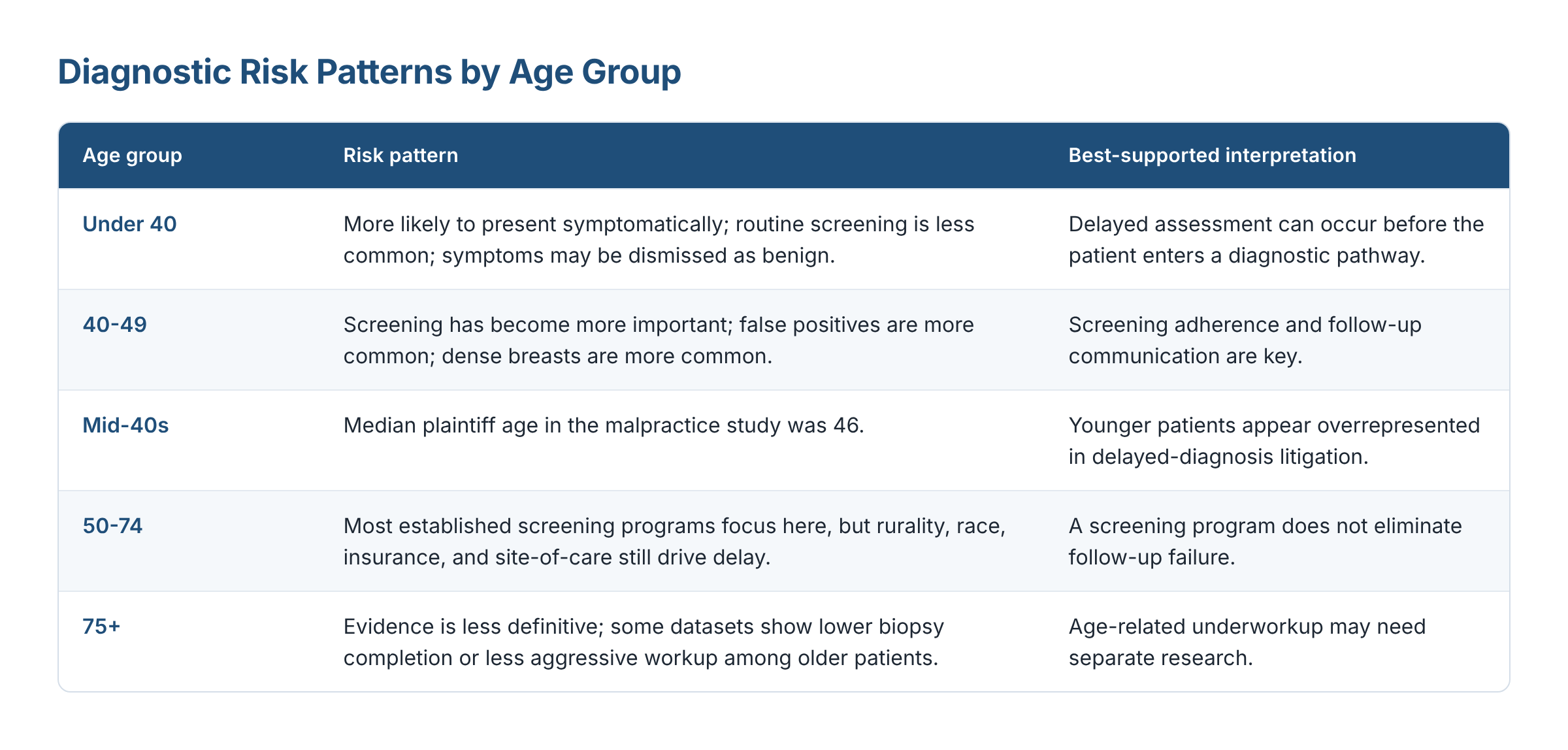
Short answer: Women under 50 face a distinct diagnostic-risk pattern. They are less embedded in routine screening pathways, more likely to present with symptoms, more likely to have dense breasts, and heavily represented in delayed-diagnosis malpractice cases.
Younger women and malpractice litigation
The 10-year breast cancer malpractice litigation study found the median plaintiff age was 46, which is much younger than the typical age of breast cancer diagnosis in the United States. Delayed diagnosis was cited in 82% of cases, and the mean delay was 17 months. This does not prove younger women are always medically misdiagnosed more often, but it strongly suggests younger women are overrepresented in breast cancer delayed-diagnosis litigation.
Women 40 and younger
An American Society of Breast Surgeons report on women age 40 and younger found most young breast cancer patients presented because of symptoms rather than screening detection. Among the patients studied, 89% had a symptom prompting assessment and 77.3% had a palpable mass. About one-third experienced a patient delay, commonly due to lack of concern, waiting through a menstrual cycle, reassurance by another practitioner, access difficulties, or competing priorities. Only about 10.1% experienced a system delay in that study, but the authors still warned that young women typically do not undergo regular screening mammography and may be diagnosed later than older patients.
California early-onset breast cancer
UC Davis / California Cancer Registry data show early-onset female breast cancer increased in California from 2006 to 2021. The report found incidence of early-onset female breast cancer increased 0.7% per year, and stage IV early-onset female breast cancer increased 2.4% per year over the full study period. The lowest five-year relative survival among females diagnosed during 2014-2021 occurred among those ages 20 to 29, non-Hispanic Black patients, and patients diagnosed at stage IV.
False positives and women ages 40 to 49
False positives are common among younger screening-age women. UC Davis reported false positives occur in 10% to 12% of mammograms among women ages 40 to 49. After 10 years of annual screenings, 50% to 60% of women can expect at least one false-positive result, and 7% to 12% can expect at least one false-positive result with a biopsy recommendation.
False-positive results matter because they can reduce future screening adherence. UC Davis reported 77% of women with a negative mammogram returned for later screening, but only 61% returned after a false-positive result requiring another mammogram in six months. After two consecutive false positives recommending short-interval follow-up, only 56% returned for their next screening mammogram. Asian and Hispanic/Latinx women were least likely to return after a false positive.
6. Clinical and Health-System Factors
Dense breast tissue
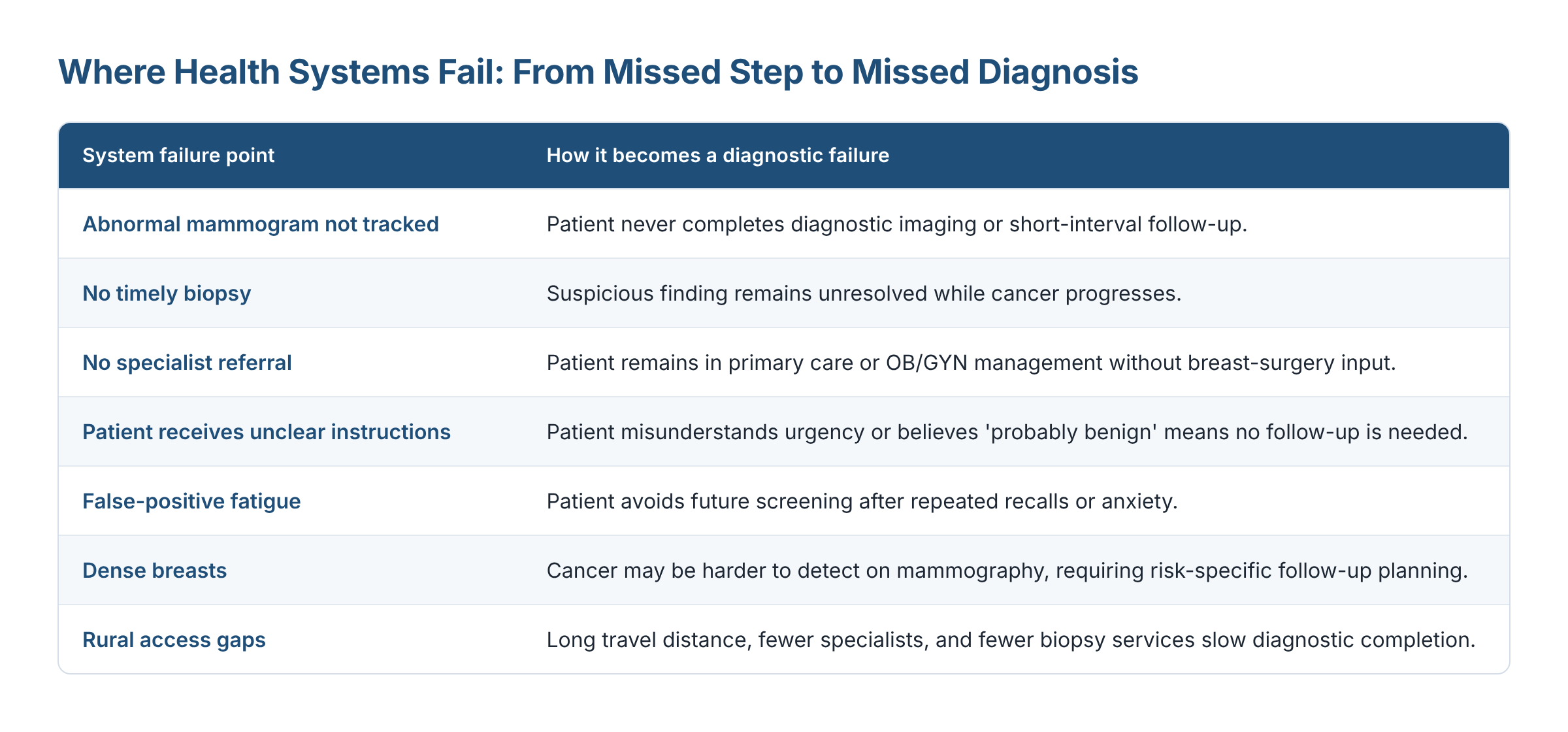
Dense breast tissue matters because it both increases breast cancer risk and makes mammograms less sensitive. The USPSTF and NCI both recognize that dense breasts can make cancer harder to detect on mammography. Dense breast tissue is common, particularly among younger women, and can contribute to false-negative screening or diagnostic studies.
Follow-up after abnormal mammography
The Breast Cancer Surveillance Consortium follow-up pathway study examined more than 35,000 positive screening mammograms and focused on diagnostic imaging and biopsy pathways after abnormal mammography. Its core relevance is simple: the clinical value of mammography depends on whether abnormal results trigger timely diagnostic imaging, biopsy, referral, and tracking.
The UCSF-linked study of women in San Francisco and Alameda Counties reached a similar practical conclusion. Mammography works best when abnormal results receive timely diagnostic follow-up. The study also observed variation by site of care, reinforcing the importance of health-system design rather than simply patient behavior.
Communication failures
CRICO / Candello malpractice data gives this issue broader patient-safety context. CRICO reported that analysts reviewed more than 73,000 closed and 64,000 asserted cases from 2014 to 2024, and that communication failures appeared in about 40% of malpractice cases. Breast cancer diagnosis relies heavily on communication: abnormal imaging must reach the patient, recommended follow-up must be explained, appointments must be scheduled, and clinicians must track completion.
7. Malpractice Data and Litigation Patterns
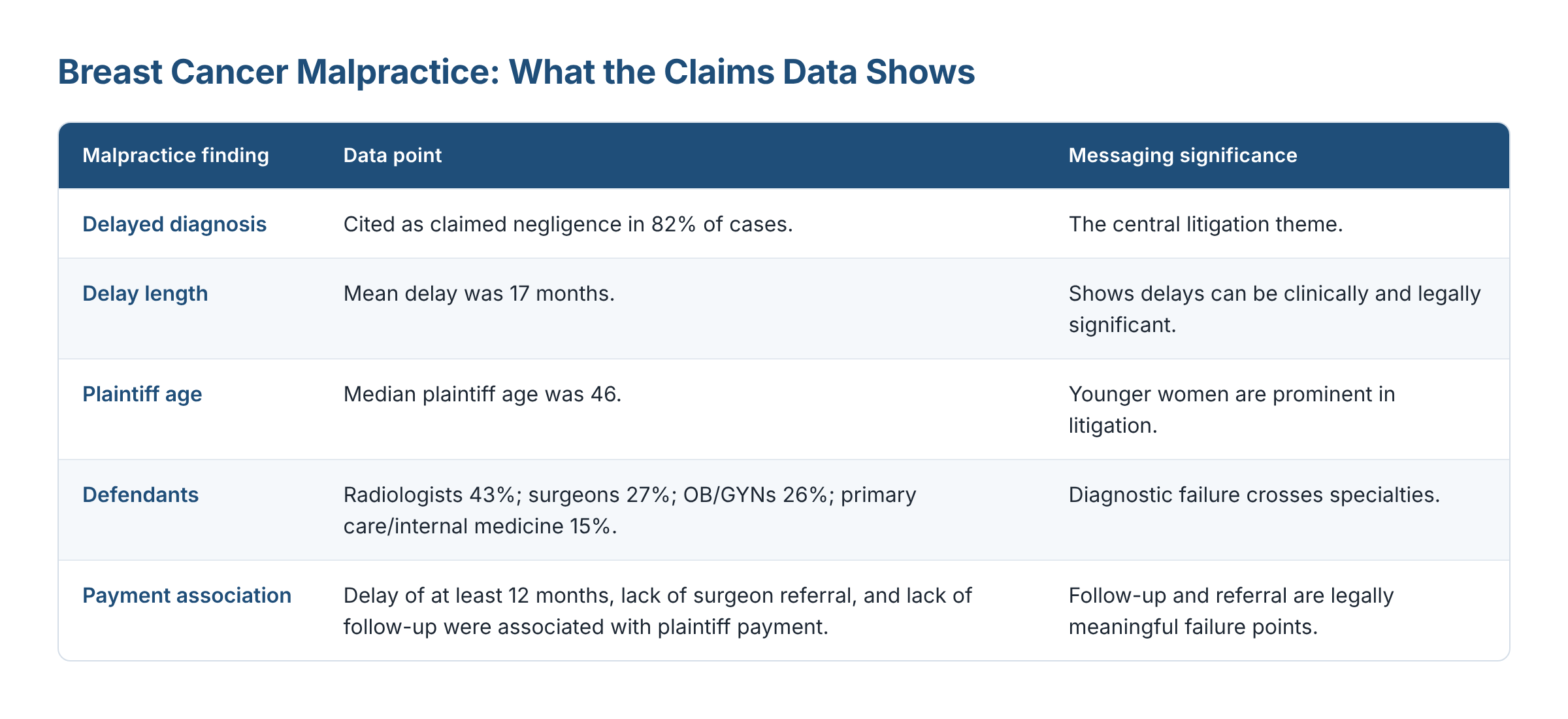
The strongest breast cancer malpractice-specific study found delayed diagnosis dominated litigation. In a 10-year analysis of breast cancer malpractice cases, delayed diagnosis was cited in 82% of cases, the mean length of delay was 17 months, and the median plaintiff age was 46. The most commonly named defendants were radiologists at 43%, surgeons at 27%, OB/GYNs at 26%, and internal medicine or family medicine physicians at 15%.
The same study found plaintiff payment was associated with a delay of 12 months or longer, lack of surgeon referral, and lack of recommended follow-up. That result is important for messaging because it aligns with the broader clinical evidence: the legal problem often arises when a finding, symptom, or abnormal result should have led to a more urgent diagnostic pathway but did not.
8. Bottom-Line Data Points and Usable Messaging
Hard-and-fast data points
• Black women show the strongest evidence of diagnostic-failure risk across multiple data types, including delay, false negatives, same-day diagnostic access, stage at diagnosis, and mortality.
• Rural women, especially rural women in parts of the South, face higher risk of advanced-stage diagnosis.
• Women under 50 face a distinct risk pattern because early-onset breast cancer is rising, screening pathways are less established, dense breasts are more common, and symptoms can be dismissed or delayed.
• The most concrete breakdown point is follow-up after abnormal mammography: diagnostic imaging, biopsy, referral, communication, and completion tracking.
• False-positive mammograms can unintentionally reduce future screening adherence, especially after repeated short-interval follow-up recommendations.
• Malpractice data confirms the same pattern: delayed diagnosis, lack of referral, and lack of recommended follow-up drive litigation risk.
Recommended public-facing frame
Breast cancer misdiagnosis is often a failure of follow-up. The burden falls hardest on Black women, younger women, rural patients, uninsured or underinsured patients, and women treated in systems that lack reliable diagnostic tracking after abnormal mammograms or breast symptoms.
Potential report angles
• The Missed Diagnosis Project: how abnormal mammograms fall through the cracks.
• Who gets delayed? Race, rural access, age, and the breast cancer diagnostic gap.
• From abnormal mammogram to biopsy: the follow-up chain where breast cancer diagnosis fails.
• Why younger women need to be taken seriously when they report breast symptoms.
• Why breast cancer screening saves lives only when health systems close the loop.
9. Source List
The report relies on the following sources. Where possible, original studies or institutional publications are preferred over secondary media summaries.
1. CRICO / Candello, '$1.5 Billion in Miscommunication: Medmal Data Report Finds Opportunities': https://www.rmf.harvard.edu/Podcasts/2025/BenchmarkCommunicationsBoulangerSchaffer
2. Breast Cancer Malpractice Litigation: A 10-Year Analysis and Update in Trends: https://www.sciencedirect.com/science/article/abs/pii/S0899707119302517
3. UCSF-linked abnormal mammography follow-up study, San Francisco and Alameda Counties: https://pmc.ncbi.nlm.nih.gov/articles/PMC2936818/
4. Breast Cancer Surveillance Consortium Follow-Up Pathway Study: https://pmc.ncbi.nlm.nih.gov/articles/PMC3640408/
5. UC Davis / California Cancer Registry, Incidence and Survival of Early-Onset Cancers in California: https://health.ucdavis.edu/media-resources/cancer/documents/pdfs/population-health/incidence-and-survival-early-onset-cancers.pdf
6. UC Davis Health, False-positive mammogram results discourage some women from future screenings: https://health.ucdavis.edu/news/headlines/false-positive-mammograms-discourage-some-women-from-future-screenings/2024/08
7. UCSF San Francisco Mammography Registry, Karla Kerlikowske, MD: https://mammography.ucsf.edu/content/karla-kerlikowske-md
8. Miller-Kleinhenz et al., Racial Disparities in Diagnostic Delay Among Women With Breast Cancer: https://pmc.ncbi.nlm.nih.gov/articles/PMC8492512/
9. Lawson et al., Disparities in Standard-of-Care, Advanced, and Same-Day Diagnostic Imaging: https://pmc.ncbi.nlm.nih.gov/articles/PMC11868819/
10. AACR, Accuracy of Diagnostic Mammograms May Vary Across Racial and Ethnic Groups: https://www.aacr.org/about-the-aacr/newsroom/news-releases/accuracy-of-diagnostic-mammograms-may-vary-across-racial-and-ethnic-groups/
11. CDC MMWR, Patterns and Trends in Age-Specific Black-White Differences in Breast Cancer Incidence and Mortality: https://www.cdc.gov/mmwr/volumes/65/wr/mm6540a1.htm
12. American Cancer Society, Breast Cancer Death Rates Are Highest for Black Women Again: https://www.cancer.org/research/acs-research-news/breast-cancer-death-rates-are-highest-for-black-women-again.html
13. American College of Surgeons, Breast Cancer Stage at Diagnosis Differs Sharply Across Rural U.S. Regions: https://www.facs.org/media-center/press-releases/2026/breast-cancer-stage-at-diagnosis-differs-sharply-across-rural-us-regions/
14. SEER-based study, Rural Residence and Advanced-Stage Breast Cancer Diagnosis: https://journals.sagepub.com/doi/abs/10.1089/whr.2021.0082
15. ASBrS, Young Women Frequently Delay Breast Cancer Assessment: https://www.breastsurgeons.org/meeting/2024/docs/ASBrS-2024-Press-Release-Young-Diagnostic-Delay-Fleshner.pdf
16. USPSTF, Breast Cancer Screening Recommendation: https://www.uspreventiveservicestaskforce.org/uspstf/recommendation/breast-cancer-screening
17. National Cancer Institute, Dense Breasts: Answers to Commonly Asked Questions: https://www.cancer.gov/types/breast/screening/dense-breasts
Research note
This memo distinguishes between direct evidence of misdiagnosis and proxy indicators. Malpractice studies are direct evidence of alleged diagnostic failure, but they reflect litigated cases rather than all clinical events. Diagnostic-performance studies directly measure false negatives. Follow-up, same-day diagnostic access, late-stage diagnosis, and mortality data are strong proxy indicators that help identify where diagnostic systems fail, but they should not be described as proving every late-stage diagnosis resulted from malpractice.
%201.avif)







Dan Hodes treated me like a human being, not just another client. He showed me he cared by how hard he worked on my case.
My daughter was born with a disability due to doctor neglect. I emailed over 200 lawyers over a 2 year time span. I had ONE lawyer believe in my case and he worked with Jeff Milman over the next year helping build my case. Jeff won my case and I cannot thank him enough for believing in me!! He was so pleasant to work with and professional. I will forever be thankful to him and his team!
They are friendly and honest and fought for what they believed was best in our interest.
Proudly Representing California Residents
Your life changed in an instant. Getting justice shouldn’t wait. Connect with Hodes Milman today and put a proven team to work on your case.